Potential customers will bite your hand off at the chance to make business simpler. But often, companies create broad campaigns that don’t always resonate with the customer. They do so to target a large group or demographic. But in business, quantity doesn’t always beat quality.
Account based selling could be your solution. It's a strategic way to target high-value accounts by identifying and targeting the issues most important to key business decision makers.
But before you put this method into practice, you must understand how it works and what’s needed to ensure success.
Let’s explore what account based selling is and whether it’s right for you and your business.
What is account based selling?
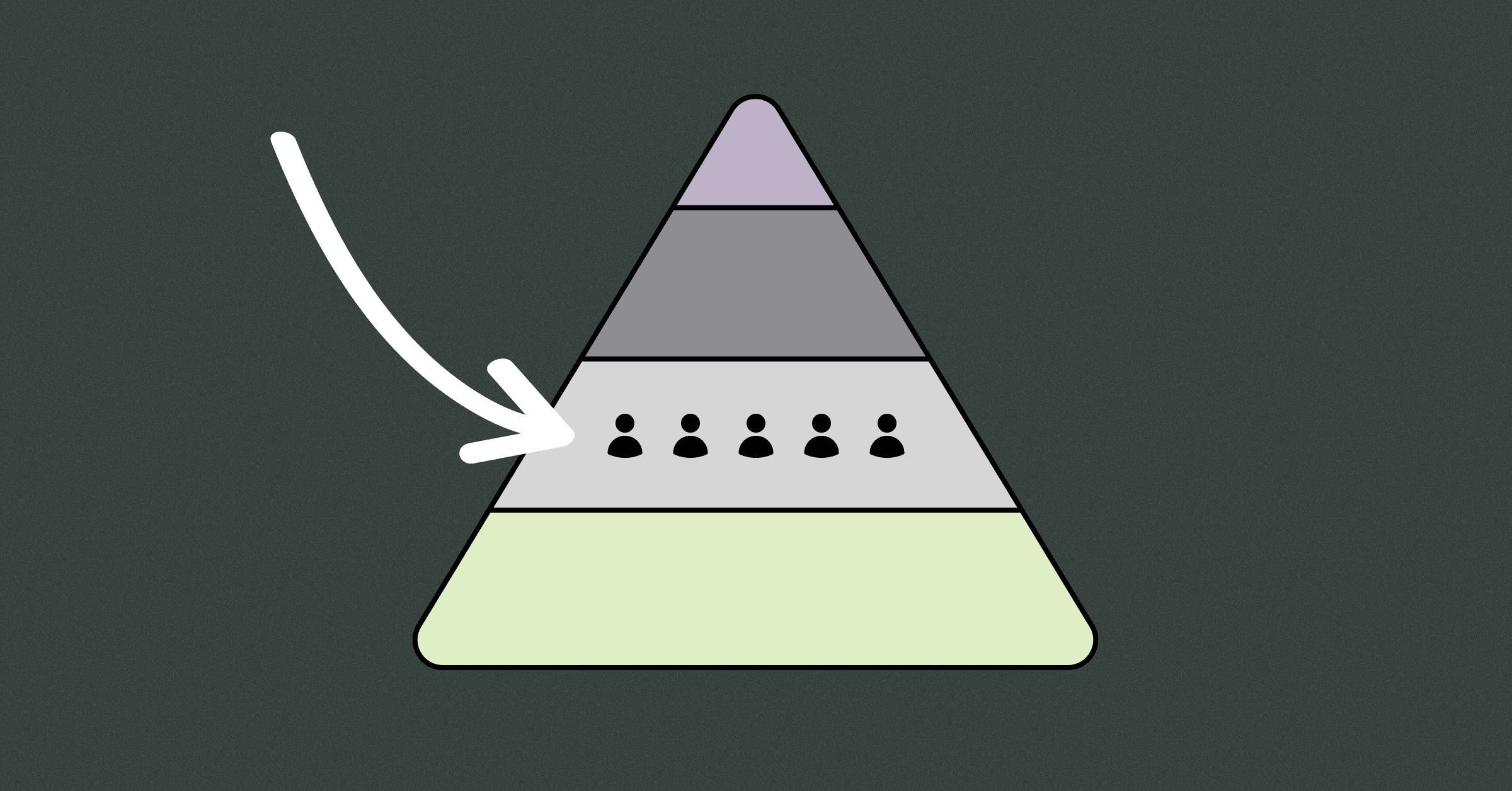
Account based selling is different from the typical sales approach. It’s a business-to-business (B2B) sales strategy that targets high-value accounts by directly engaging with the needs of key stakeholders. To do this, a sales team needs to create an ideal customer profile (ICP). This helps sales understand why businesses buy their products and services, and helps them to identify target accounts. Once your sales team understand the needs of their customers they’re able to create a personalized approach and build stronger, more successful relationships with potential customers.
When does account based selling work best?
A personalized approach isn’t always your best bet. Account based selling is most effective when selling to large organizations with long sales cycles. A targeted approach takes time and money to prepare, so you need to ensure the payoff is worth it.
You have a small number of accounts to pitch to
Account based selling is a marathon, not a sprint. Researching prospects and target accounts takes time and effort so you need to consider whether your resources are better spent elsewhere. If your industry is niche then a targeted approach can help you secure those big business opportunities that’ll help you to grow.
You’re making a high-value sale
Account based selling is great for targeting high-value accounts. The costs of preparing the pitch and campaign are justified as you know that you will receive a large fee in return, if you’re successful.


You have a well-equipped sales team
Account based selling can be tricky. You need to build the right sales team to pull together to complete the process. They will need to be well-equipped and experienced to be able to build a successful strategy that will foster great results.
Examples of account based selling
Account based selling is used in a wide range of business settings. Sales teams will utilize resources to gather information and use this to identify needs in the targeted business.
For example, a car manufacturer may want to have their product showcased by a certain dealership. This could be because of the type of clients they have, or the business's location, both of which will increase the number of potential customers and sales.
To ensure success in their pitch, sales professionals should understand the needs of the business as well as who the key decision makers are. With this information, your sales team can tailor a pitch with higher levels of success leading to increased revenue.
When is account based selling not useful?
When selling to smaller businesses it may be best to adopt a mass market approach. Focus on the general issues that affect a range of businesses or industries. This can result in a larger number of smaller sales that equals the revenue of a larger account.
Account based selling vs account based marketing
Account-based selling and account-based marketing (ABM) are two similar but not identical concepts. They are complementary approaches that businesses can use to target and engage with their ideal customers.
Account-based selling focuses on personalized sales strategies made to target individual accounts. Account-based marketing, however, takes a wider approach.
Here, you tailor marketing campaigns and messaging to attract a specific audience. Both strategies require collaboration between sales and marketing teams so it’s important to align them.
Without alignment, it can be hard to effectively identify and engage key decision-makers. Meaning businesses will struggle to create a successful account-based strategy that combines personalized relationship building with targeted marketing efforts. This means you could miss out on customer success and revenue growth.
The combination of these two approaches can lead to greater success in engaging and converting target accounts. Account-based selling relies on personal outreach and relationship-building, while account-based marketing leverages digital channels.
Let's explore the key differences in closer detail:
Core focus: ABM and ABS have different focal points. Account based selling focuses solely on revenue generation, while ABM looks at lead generation and ways to increase revenue.
Operational approach: An ABS specialist will consider ways to close deals through targeted sales tactics. Account based marketing takes a different approach and looks at ways to manipulate data and solidify leads. This is done through market research on ICPs to help convert prospects into clients.
Target alignment: ABM and ABS can and should share audience data - after all, they have the same end goal. Effective communication and collaboration are crucial, otherwise, you could be left with duplicated effort or unnoticed errors. Alignment is the best way to ensure client satisfaction and ultimately boost results.
Securing large accounts: When ABM identifies large accounts with high revenue potential, both teams must work closely together. Account based marketing will focus on targeting ads and web personalization, while ABS will likely use email communication and social media channels to convert the target account into a paying client.
The interplay between marketing and sales
Collaboration between marketers and salespeople is essential for successful account-based strategies. Each team provides valuable insights and data to support one another, as well as valuable feedback about the effectiveness of a campaign and its messaging. This helps to create a coordinated and consistent approach that supports the success of any campaign.

Together, both teams can provide valuable insight when identifying and targeting key decision makers and guiding them through the sales funnel. By working together, these strategies creates a seamless customer experience and provide a comprehensive view of a target account as a whole. Marketers and salespeople can collaborate to ensure they're on the right track.
Add after “The interplay between marketing and sales”
4 tools that can support an account-based selling strategy
Account-based selling works better when each tool in your stack has a clear job. Rather than looking for one platform to handle research, intent signals, relationship management and outreach, sales and marketing teams can combine a few specialized tools.
Here are four that can support different stages of an account-based selling workflow.
1. Capsule CRM – for managing target accounts and sales relationships
Capsule can act as the central CRM layer for an account-based sales process. Teams can keep contact and company information together, track opportunities through the sales pipeline, assign tasks and maintain a record of conversations and activity around each account.
For an ABS team, the CRM should remain the place where salespeople can quickly understand who owns the relationship, what has already happened and what should happen next.
Best for: Keeping target accounts, stakeholders, opportunities and follow-up activity organized in one place.
2. ZenABM – for identifying which target accounts are showing intent
ZenABM helps marketing and sales teams understand which companies are engaging with their account-based advertising campaigns and which accounts may be ready for outreach.
The platform combines company-level engagement signals from channels such as LinkedIn Ads, Google Ads and Reddit Ads with CRM and pipeline data. It can score accounts based on engagement, organize them into funnel stages, surface intent signals and show how campaigns influence pipeline and revenue.
This becomes particularly useful when an account has interacted with advertising but has not filled in a form or become an obvious inbound lead. Instead of treating every target company the same, sales teams can use engagement context to prioritize warmer accounts and adapt the conversation to the campaigns or topics they have already interacted with.
Best for: Turning account-level advertising engagement into prioritization, intent signals and revenue attribution.
3. LinkedIn Sales Navigator – for mapping people inside target accounts
LinkedIn Sales Navigator helps sales teams research target organizations and identify the people most relevant to a deal.
Teams can create account and lead lists, monitor priority accounts, find recommended leads and use buyer-intent and relationship signals to decide who to approach. Relationship Maps can also help sellers build a clearer picture of the stakeholders involved in larger buying decisions.
For account-based selling, this is useful when identifying not just one prospect, but the group of decision-makers and influencers who may affect the deal.
Best for: Finding, organizing and monitoring stakeholders within target accounts.
4. Clay – for enriching account and contact research
Clay can support the research layer of an ABS workflow by enriching existing account and contact data from multiple sources.
Teams can add company information, social profiles, contact details and other attributes to their existing lists, then use enrichment rules and workflows to prepare more complete records for further research or outreach.
This can reduce some of the manual work involved in researching a small group of high-value accounts before creating personalized messaging.
Best for: Enriching account and contact data before personalized outreach.
How these tools fit together
The point is not to add more software for the sake of it. Each platform should answer a different question.
Capsule helps the sales team understand what is happening with the account. ZenABM can reveal which accounts are engaging with ABM campaigns and showing stronger intent. Sales Navigator helps identify who matters inside the organization, while Clay can provide additional account and contact context for research and personalization.
That gives sales and marketing teams a more complete view of the account without forcing one platform to handle every stage of the process.
Benefits of account based selling
Account-based selling is mutually beneficial for both salespeople and marketers. Personalization is crucial to getting to the heart of a business and strategic targeting of high-value accounts can lead to impressive results. This is because it allows teams to directly address customer pain points. Let’s explore some of the other benefits of account based selling:
Higher conversion rates
Bespoke messaging and directly contacting target accounts yields success because it increases the likelihood of capturing a business’ attention. This is because it directly speaks to an organization’s needs. This approach allows you to allocate your resources and focus solely on high-potential accounts.
This can lead to improved conversion rates. Strong customer relationships with key decision-makers within these accounts are crucial as they improve your chances of closing deals. Ultimately, this strategy enables a more targeted and efficient sales process, driving higher conversion rates and business success.
Revenue growth
Account-based selling primarily focuses on high-value accounts, leading to larger deals. Engaging decision-makers via ABS opens up opportunities for upselling and cross-selling driving revenue growth. Successful ABS strategies not only result in repeat business, it also helps to foster long-term customer relationships and business loyalty.
By targeting accounts with the highest revenue potential, salespeople can prioritize their efforts and therefore, maximize growth.
The personalized approach of ABS ensures that deals are tailored to meet the unique needs of each customer and business. This leads to higher conversion rates as well as higher value deals.
Improved customer retention
Improved customer retention is one of the key benefits of account-based selling. A personalized approach allows salespeople to provide proactive customer support while effectively addressing the specific pain points and needs of their target accounts. This fosters loyalty and reduces churn, as it creates a relationship built on trust and mutual understanding.
In addition, this approach enables your sales reps to engage proactively and prevent customer dissatisfaction creating an enhanced customer experience.
Better marketing alignment
Aligning your marketing and sales teams is crucial for effectively targeting high-value accounts. Adopting account-based marketing strategies, allows teams to tailor messaging and resonate with key decision-makers. Account-based selling further enhances this alignment by facilitating personalized outreach and engagement. This, coupled with leveraging CRM data, means you’ll identify potential customers and find businesses that are the right fit for your account-based campaigns. Utilizing this approach in your marketing strategies helps to develop better alignment between your sales and marketing teams, leading to improved targeting and higher conversion rates.
Creating an account based selling framework
Sales teams must begin by creating an effective account based selling framework by defining their ideal customer profile to identify your target accounts. Developing buyer personas gives sales teams a deeper understanding of the pain points and challenges faced by a target audience. By following these steps, you can build a strong foundation for successful account-based selling.
Identifying key customers
The most crucial step in account-based selling is identifying key customers.

Key decision-makers play a vital role in the success of your sales model. So, by identifying this, you can tailor your strategies and ensure a high-touch approach and customer success.
This can be done by following a few simple steps:
- Analyze data and customer insights.
- Consider average deal size and customer satisfaction.
- Prioritize accounts that align with business goals.
- Focus on building relationships with customer stakeholders.
Designing a customized outreach strategy
Designing a customized outreach strategy is crucial when implementing an account-based selling strategy. This can be done via the following steps:
- Developing personalized messaging and content for each target account
- Focus on specific needs and pain points
- Leverage various communication channels like LinkedIn and email to reach decision makers
- Tailor your outreach strategy to align with the buyer's journey
- Combine your approach with account based marketing tactics
- Engage potential customers with automation tools.
This approach can streamline and scale your outreach efforts and increase the effectiveness of your account-based sales strategy.
Targeting key stakeholders
It’s crucial that you understand who holds the power and influence in making purchasing decisions. Different stakeholders have different needs, so sales people need to consider this before targeting their messaging. It’s important to consider what challenges each stakeholder faces and how your product or service can alleviate these challenges.
Personalized approaches help build relationships with stakeholders through high-touch interactions. Collaboration throughout the business is crucial to ensure alignment and further nurture relationships.
Measuring and optimizing campaigns
To ensure the success of your account-based campaigns, it is important to define metrics and key performance indicators (KPIs). These could be:
- Customer acquisition costs
- Retention and churn rates
- Average purchase value
- Sales per representative
- Customer acquisition cost
- Average cost per lead.
This can help evaluate their effectiveness and identify mistakes. Tracking the sales cycle and measuring the impact of your outreach efforts are crucial steps in understanding the performance of your campaigns. By analyzing data and insights, you can optimize your messaging and strategies for better results in future campaigns.
Utilizing customer case studies and testimonials can showcase the return on investment (ROI) of your campaigns. This can help you to further assess your overall success while continuously refining your account-based selling approach.
Conclusion
Account Based Selling is a highly effective strategy for sales teams to close more deals but only if it’s done right.
By focusing on personalized outreach, targeting key stakeholders, and measuring campaign effectiveness, you'll be rewarded with higher conversion rates, improved customer retention, and better alignment between marketing and sales teams.
But you need to know when it’s best suited.
Click here to learn more about Capsule CRM, which serves as a CRM and project management tool. This can help you manage account based sales pitches by monitoring effectiveness and outreach methods. You can get started by accessing a 14-day free trial today.