Business to consumer is a broad label. A yoga studio, a subscription coffee brand, a local solicitor, and an e-commerce retailer all deal directly with individual customers – but they have almost nothing else in common.
While a yoga studio needs to track client relationships across bookings and referrals, an e-commerce brand needs to handle high volume, cart abandonment, and automated post-purchase flows. Lumping them together and adopting a one-size-fits-all mindset is how most CRM guides fail their readers.
This piece takes a different approach. Before covering which tools are worth considering, it frames the four types of B2C business and what each actually needs from a CRM solution. We’ll suggest tools based on context, rather than a generic feature checklist.
Why the best CRM for B2C business may differ from B2B
In B2B, customer relationship management typically involves long sales cycles, multiple stakeholders, and a relatively small number of high-value accounts. A sales team works deals over weeks or months, with considerable back-and-forth before anything closes.
B2C operates differently. The sales process is shorter – often a single decision by a single person. There are no multiple stakeholders to navigate.
However, the volume is higher, the relationships are more emotional, and customer retention works differently. B2C companies achieve a 12-month customer retention rate of around 74%, compared to 82% for B2B. That’s a meaningful gap that reflects how much harder it is to keep individual consumers engaged over time.
With the cost of acquiring a new customer five times higher than retaining one, losing a customer can be costly. 56% of shoppers become repeat buyers following personalized experiences, and a 1% rise in customer satisfaction can boost retention by 5%.
These stats define the job of a B2C CRM: not to close more deals, but to turn one-time buyers into loyal customers through relevant, timely communication. Customer service tools that make existing customers feel remembered are often more valuable than any acquisition campaign.
The four types of B2C business
Service-based B2C (coaches, therapists, tradespeople, consultants, personal trainers)
These businesses live and die by the follow-up. Since every client represents a significant relationship, the goal is simple: tracking the nuances of a handful of clients rather than the surface-level data of thousands. You don’t need a factory-line for leads; you need a system that remembers the details and prompts the next move at exactly the right time.
Local and SMB retail or hospitality (independent retailers, salons, restaurants, boutique hotels)
In retail and hospitality, the best marketing is simply being a good host. These teams need a way to track the small details that turn a one-time visitor into a regular. It’s about having the context to send a perfectly timed "we haven't seen you in a while" email or a birthday offer that actually feels like an invitation.
E-commerce
This is a game of high volume and short windows. When the sales cycle is measured in minutes, "always-on" automation is the only way to keep up. The shorter the gap between "interest" and "purchase," the better. Your CRM needs to be the glue between your store and your marketing, automating tasks like order updates and cart recovery so you can focus on the product.
Subscription and membership businesses
A subscription business is only as strong as its renewal rate. The CRM acts as the safety net, catching members who haven't logged in or interacted lately with automated, personal-feeling "we miss you" prompts. The main purpose is to minimize churn by staying one step ahead of a lapsed payment or a fading interest.
The best CRM tools for B2C businesses in 2025
1. Capsule CRM: best for service-based and SMB B2C

G2: 4.7/5 (449 reviews) · Capterra: 4.8/5
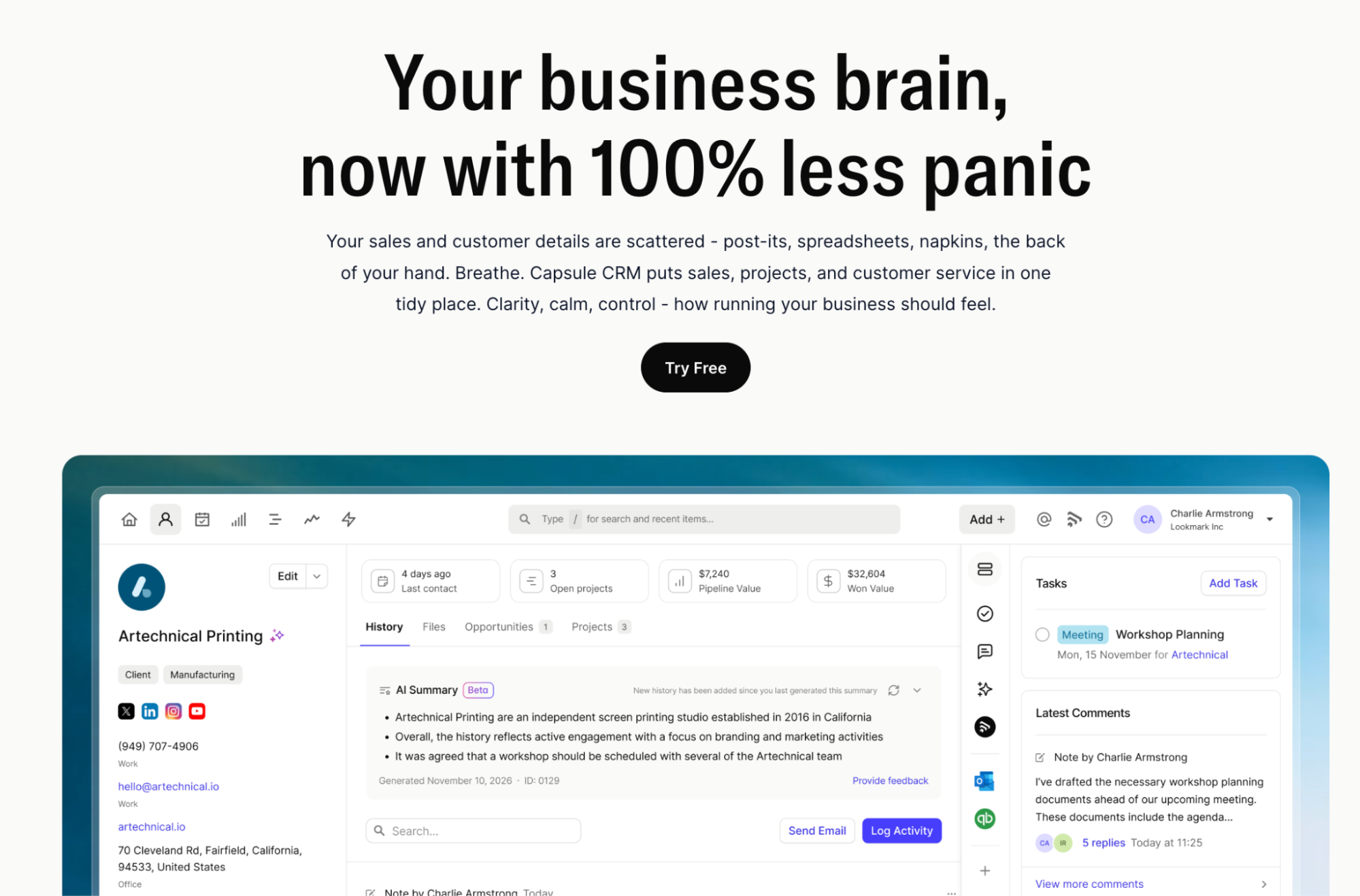
Capsule is the best CRM for service-based B2C businesses and smaller consumer-facing operations. It's fast to set up, and built around managing relationships with individual customers.
The contact management system provides every team member with a 360-degree view of each customer. This visibility standardizes personalized service, ensuring clients feel recognized at every touchpoint.
The sales pipeline is fully customizable, allowing businesses to map stages (like inquiry, consultation, or proposal) to their specific workflow. To reduce the administrative burden, automated Tracks handle routine follow-ups and onboarding sequences.
As a firm scales beyond its founder, a shared database allows everyone to operate from a single source of truth. To save time before calls, AI Summaries condense lengthy communication histories and open tasks into a 30-second brief.
Capsule bridges the gap between sales and marketing through native connections to tools like Mailchimp and Transpond. And by integrating directly with accounting software, it also keeps financial data in sync across your existing tech stack.
Pricing: Free plan available. Starter from $18/user/month; AI features from $36/user/month.
2. Zoho CRM
G2: 4.1/5 · Capterra: 4.3/5

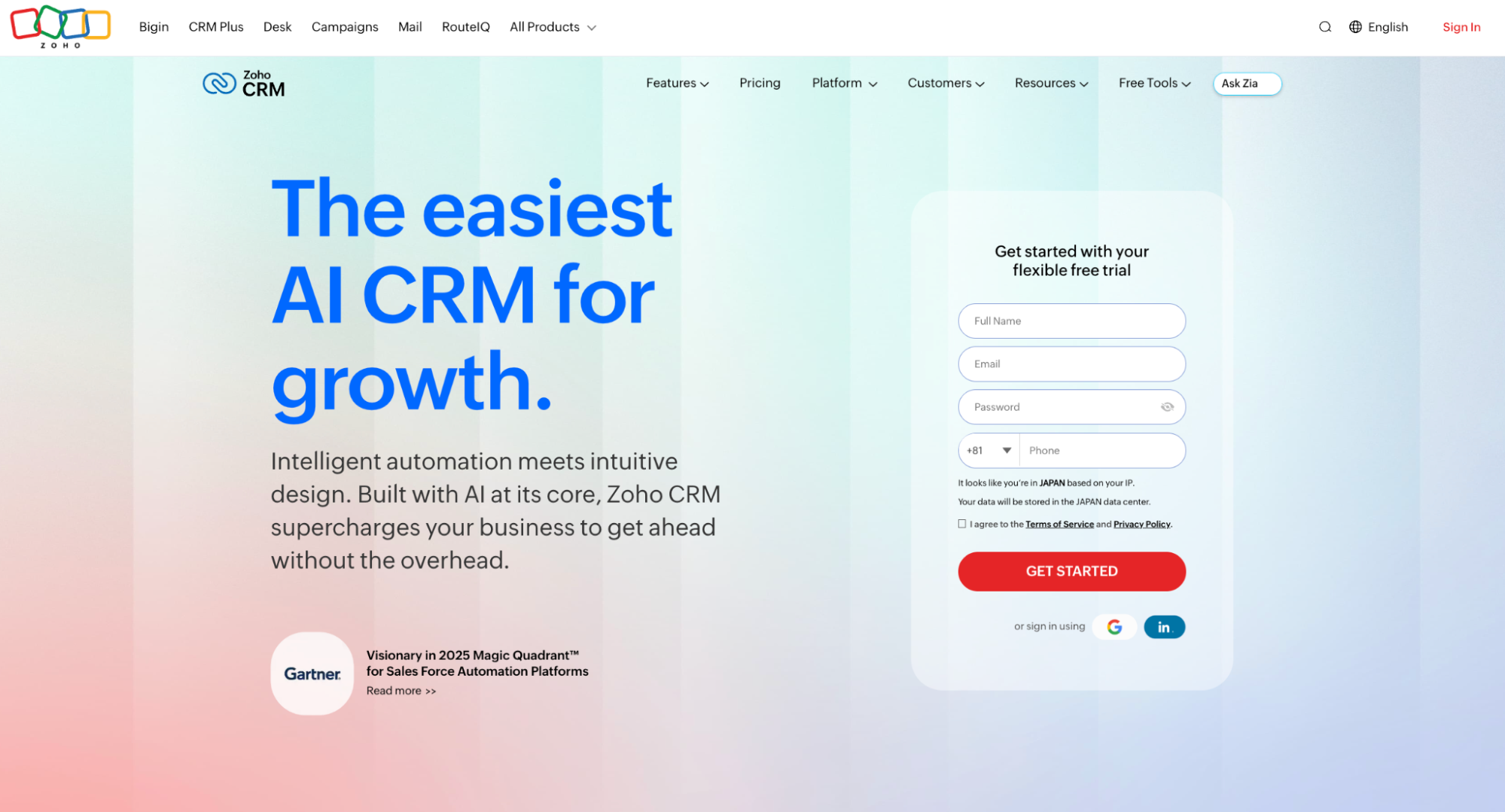
Zoho CRM is a flexible CRM that handles the breadth of business processes a growing B2C operation needs, within a single platform. The ability to customize Zoho CRM to reflect specific workflows makes it a strong fit for B2C businesses with non-standard sales journeys or complex customer segmentation needs.
Zia, Zoho's AI assistant, shows data-driven insights from customer behavior and flags important metrics: which segments are most valuable, where the sales funnel is losing potential customers, which marketing campaigns are generating repeat business.
However, Zoho's breadth rewards configuration effort. For businesses that want something operational from day one, the setup investment is real.
Pricing: Free plan available. Standard from $14/user/month.
3. HubSpot
G2: 4.4/5 (12,914 reviews)

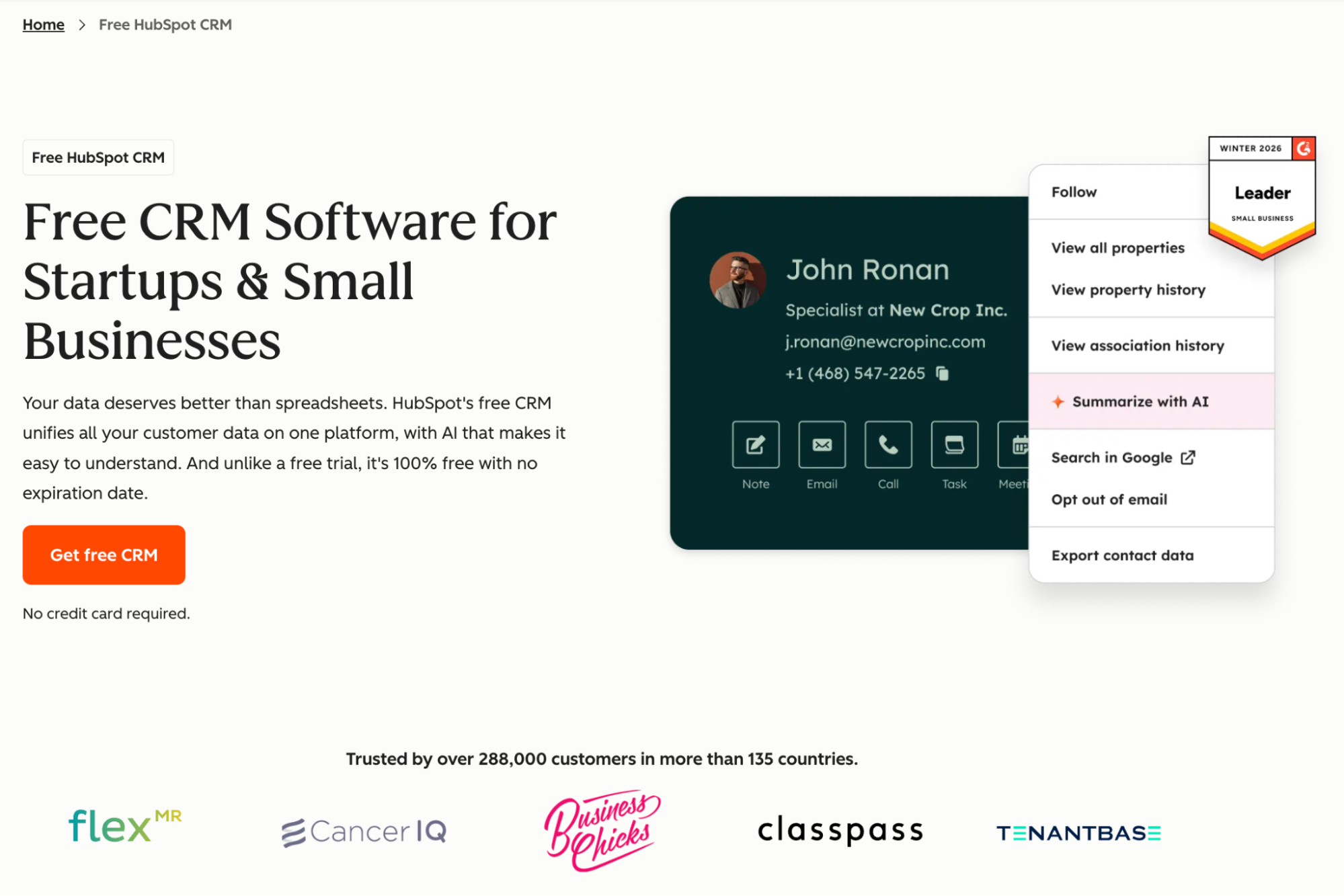
HubSpot excels in B2C by merging relationship management with high-velocity marketing. Housing lead nurturing, email sequences, and multichannel campaigns within a single ecosystem eliminates the friction of syncing data. This unified approach keeps marketing efforts fueled by real-time customer data, a critical advantage for businesses relying on automated outreach.
The free CRM tier is very useful for small businesses starting out. Sales reps and service teams share a single view of existing customer data. Marketing teams run campaigns from the same platform. And then, the customer journey is visible from first contact through to loyal customers and beyond.
The caveat is HubSpot’s cost. The free plan covers the basics, but the automating tasks, advanced segmentation, and full marketing automation tools that make HubSpot powerful for B2C sit behind paid tiers that escalate quickly.
For businesses with a mature, complex marketing setup, the cost can be justified. For those with simpler needs, it may be more than required.
Pricing: Free plan available. Starter from $20/user/month.
4. ActiveCampaign
G2: 4.5/5 (13,000+ reviews)

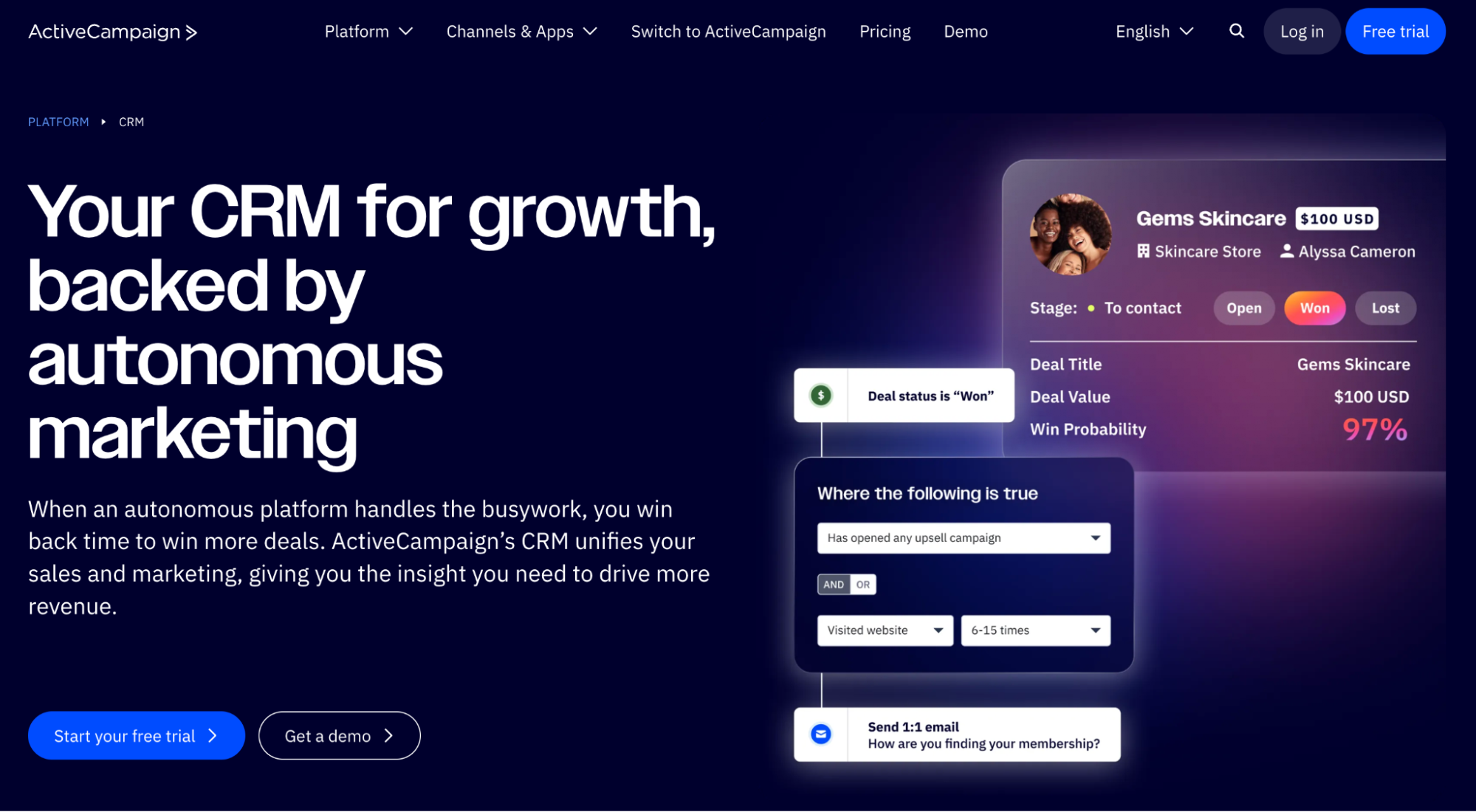
ActiveCampaign functions as a sophisticated "if-this-then-that" engine for high-volume digital commerce. It thrives on behavioral data, triggering specific emails or SMS messages the moment a customer abandons a cart, browses a specific category, or hits a loyalty milestone.
The platform excels at machine-led relationships. Instead of a salesperson manually tracking leads, the software monitors site tracking and purchase history to segment audiences automatically. This precision allows small teams to deliver hyper-relevant messaging that feels personal without requiring human intervention for every click.
However, the interface can feel overly technical for service-oriented firms. If your business relies on deep, one-on-one consultation, the sheer density of the automation builder creates more friction than it solves. ActiveCampaign is a powerhouse for moving products, but it can be overkill for managing individual client conversations.
Pricing: Starter from $15/month; Plus from $49/month.
5. Pipedrive
G2: 4.3/5 (2,796 reviews) · Capterra: 4.5/5

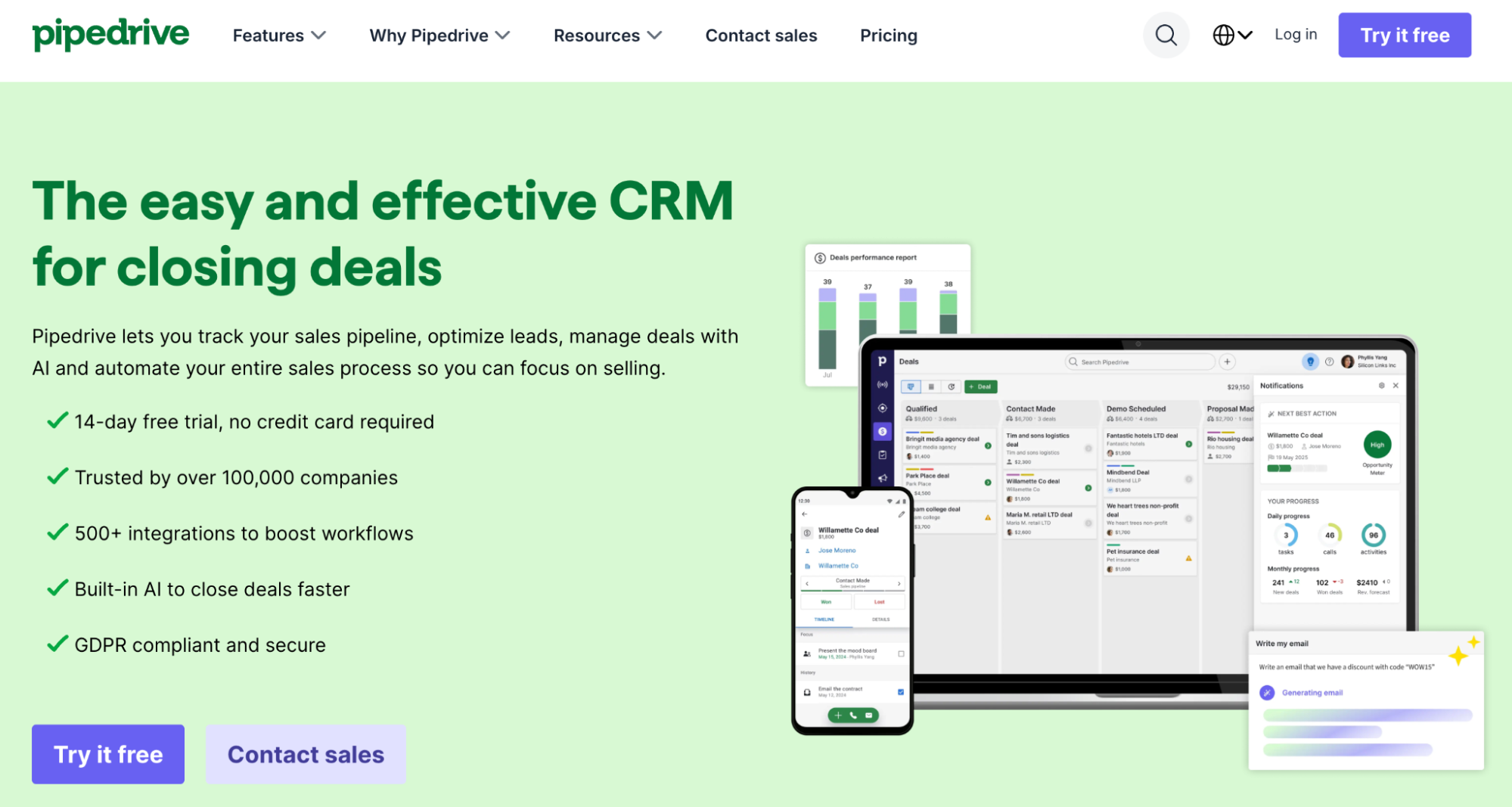
Pipedrive functions as a high-visibility mission control for deal-driven businesses. It replaces spreadsheets with a drag-and-drop interface, mapping every prospect's journey from initial inquiry to a final signature. This visual clarity helps sales teams spot stalled deals instantly and prioritize the most promising leads.
The platform is good at stripping away administrative friction. Automated triggers handle repetitive follow-up emails and task updates. It is a tool designed for "closers" who need an intuitive environment to navigate high-volume sales conversations.
However, Pipedrive is strictly a sales engine, not a marketing hub. It lacks native tools for running mass email campaigns or managing long-term customer loyalty programs. While it handles the funnel, businesses requiring built-in marketing or retention features will find the platform's narrow focus requires a separate software stack to handle post-sale engagement.
Pricing: Essential from $14/user/month.
Choose the best CRM for your B2C business
Selecting a B2C CRM requires an honest assessment of your customer volume versus your relationship depth. The most feature-rich platform is rarely the "best"; the goal is matching the software to your actual daily bottlenecks.
For businesses managing a few hundred clients where every interaction counts, success depends on contact history. Capsule thrives here by centering the person rather than just the transaction. It provides a clean, clutter-free environment that builds a "shared memory" for your team so no detail is lost as you scale.