
Ask most business owners and they’d agree that strong client relationships are vital. It’s common sense – when everything else is equal, customers choose the business they have a good relationship with.
If we’re being honest though, building and maintaining client relationships often feels like a lot of extra work. Many professionals love delivering their services but struggle with the follow-ups, check-ins, and small personal touches that keep clients engaged.
It’s not that they don’t care. It’s just that managing client relationships, alongside everything else on your to-do list, can feel overwhelming.
The good news? Building client relationships doesn’t have to be time-consuming or stressful. With the right approach, you can make clients feel valued without turning it into a full-time job.
In this post, you’ll learn how to build strong connections, with a step-by-step guide to using your CRM to nurture personal relationships effortlessly.
By the end, you’ll see how easy it is to maintain meaningful, long-term client relationships, without it taking over your schedule.
Why personal client relationships matter
Customers choose who they do business with based on a variety of reasons, from price to convenience, but one of the most important factors is trust.
It doesn’t matter how low-cost your product is or what amazing benefits it offers – if the client doesn’t believe you’ll deliver on your promises, they’ll take their business elsewhere.
To build that trust, you need to build relationships.
In turn, those relationships improve retention rates. Getting customers through the door is obviously important, but it’s all for nothing if getting them to stay isn't a priority. Retaining existing clients is significantly more cost-effective than acquiring new ones, and that’s more likely to happen when you make them feel valued through strong relationships
Those relationships also help with customer acquisition. A positive, personalized experience turns clients into your best advocates. One study from Nielsen found word-of-mouth was one of the most credible forms of advertising, with over 33% saying they trust it completely.

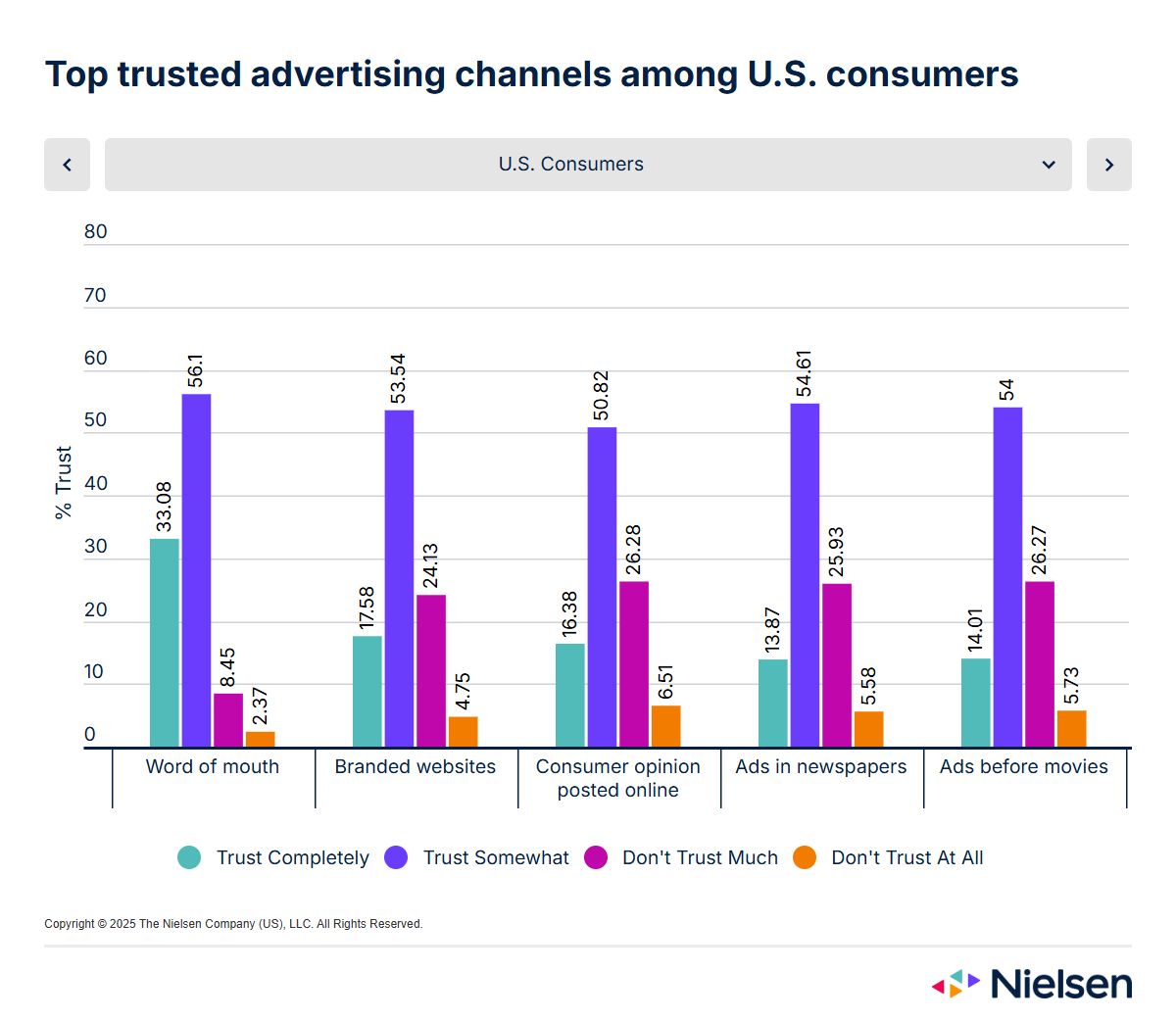
By building relationships with clients, they’re more likely to refer your services to others so you can benefit from that channel.
Common challenges in building personal client relationships (and how to overcome them)
It’s clear that strong client relationships come with lots of benefits, but actually maintaining those relationships is another story. Many professionals find this aspect of their work stressful, feeling like they don’t have the time or mental energy to keep up with every single client.
Keeping track of customers’ needs, remembering key details, and consistently following up can seem impossible – especially when you’re already busy enough with your actual work.
Here are some of the most common challenges businesses face when trying to build personal client relationships, along with practical ways to overcome them.
Challenge 1: Keeping track of client details without getting overwhelmed
The more clients you have, the harder it is to remember key details. After a while, your conversations start blending together. Was it James or John who mentioned a preference for in-person meetings? Was he the one who said he was interested in upgrading his service package? Or was he looking for a different solution?
Here’s how to fix it:
Record key client details immediately after each interaction. Develop a habit of recording any important details as soon as they come up. Jot down any insights that might help personalize future conversations, such as interests, pain points, or recent projects.
For example, imagine you’re an interior designer discussing color palettes with a client. They mention they love earthy tones, but their partner prefers cool grays. If you note this down, you can reference it in your next conversation, showing them you truly listened.
Keep everything in one place. Scattered notes in emails, notebooks, and mental reminders won’t cut it. If you keep all your client information in one place, you’ll always have an easy reference when you need it, whether it’s their preferences, purchase history, or previous feedback.
Challenge 2: Staying in touch without feeling like you’re nagging
Many professionals worry about coming across as pushy, so they hesitate to reach out. Others get so caught up in their work that months go by without any client check-ins.
Here’s how to fix it:
Set a simple schedule for client touchpoints. A quick email, a relevant article, or a friendly check-in can keep relationships warm without feeling intrusive. For example, if you’re a business consultant, you might check in two months after a project to see how implementation is going. Use automated reminders or repeating tasks with due dates to avoid forgetting check-ins in future.
Vary your communication style. Not every interaction needs to be about business. A quick message with an article relevant to their industry or a comment on a LinkedIn post can keep relationships warm naturally. Sometimes, a casual “Hope things are going well!” is enough to stay on their radar.
Challenge 3: Managing multiple clients without losing focus
If you’re just handling one client, it’s easy to keep on top of your relationship without too much effort. However, as soon as you’re juggling multiple clients, you need a system. Without one, you’ll inevitably end up forgetting to follow up.
Here’s how to fix it:
Use a structured approach to track ongoing client relationships. Organize clients by stage (e.g., new, active, needs follow-up) so you can easily see where attention is needed. A wedding planner, for example, might organize clients based on their event timeline, with upcoming weddings in one group and post-wedding follow-ups in another. This way, he knows exactly who needs attention at any given time.
Prioritize clients strategically. Not all relationships need the same level of attention. Work out which clients require more frequent touchpoints and which can be nurtured more passively. A financial advisor might have more frequent check-ins for high-value clients while communication for smaller accounts might be more passive, allocating her efforts more efficiently.
How to make client relationships feel natural
The key to any long-term, meaningful connection is authenticity. Clients can tell when interactions are purely transactional, and no one likes feeling like just another name on a list.
So, how can you stay in touch, personalize interactions, and nurture relationships in a way that feels genuine rather than forced?
Reference past interactions to keep conversations relevant
Nothing feels more impersonal than a generic check-in. Instead of sending vague messages like “Just following up,” try referencing something specific from a past interaction. Personalized follow-ups feel more natural and engaging, encouraging your clients to respond and leading to stronger interactions.
For example, instead of “Hope you’re doing well,” say: “Last time we spoke, you mentioned launching a new service, how’s that going?” This small detail shows the client that you remember them as an individual, not just another contact in your system.
Make small, thoughtful gestures that show you care
You don’t need grand gestures to build relationships; small, thoughtful touches can go a long way. Clients often appreciate it when you go beyond business and take the time to understand their interests.
For example, if a client casually mentions they love a particular coffee brand, why not treat them to a cup (you could meet in person or send them a gift voucher)? If you notice a client’s business milestone or award, congratulate them with a short message or LinkedIn comment.
Mix up your touchpoints to keep engagement easy
Not every client interaction needs to be a formal email or scheduled call. Varying how you stay in touch makes communication feel less robotic and more spontaneous.
Instead of making every touchpoint an email, try:
- Sending a quick voice note
- Recording a video message
- Commenting on their social media posts
- Picking up the phone.
When you change up the way you stay in touch with clients, they don’t feel like you’re just ticking a box with a scheduled email. It removes any pressure and becomes a natural part of staying connected.
Give before you ask
One of the best ways to build genuine relationships is to provide value without immediately expecting something in return. Instead of only reaching out when you need something, offer insights, resources, or connections that might benefit the client.
For example, if you’re in marketing and a client is struggling with social media, send them a quick, relevant tip or free resource – without any sales pitch attached.
This shifts the dynamic from selling to helping, making interactions feel more authentic. When clients see you as a trusted resource, they’re more likely to engage with you over the long term.
Build follow-up habits before customers chase you
Follow-up quality is one of the clearest signs of relationship health.
Customers lose trust when they have to chase updates. They also lose trust when follow-ups come with no context, no clear owner, or no next step. A growing team needs consistent follow-up habits because more people create more chances for loose ends. Building that consistency early matters — a guide from ZenBusiness on follow-up marketing notes that 80% of sales require an average of five follow-ups after the initial meeting, yet most small business owners do little to no systematic follow-up at all. Good follow-up does not mean sending constant messages. It means closing loops.
After a sales call, the prospect should know what happens next. After onboarding, the customer should know which milestone comes next. After a support issue, the customer should know whether the team is investigating, escalating, or waiting for their input. After a renewal conversation, all parties should understand the timeline.
A useful follow-up includes four elements:
- What changed or what was discussed
- What happens next
- Who owns it
- When the customer can expect an update
This works for sales, support, success, and operations.
For example:
“Thanks for walking us through the reporting issue. We’ve confirmed it affects the regional dashboard only, not the main account view. I’m checking this with our technical team and will update you by Thursday afternoon. If the fix needs more time, I’ll share the interim workaround as well.”
That follow-up reduces uncertainty. It also shows ownership.
Long-term relationships depend on these small moments. Customers may not remember every update, but they remember whether they had to chase.
Align sales, support, and customer success around the same relationship
A customer relationship does not belong to one department forever. Sales may start the relationship. Customer success may grow it. Support may protect it during difficult moments. Leadership may step in for strategic accounts.
If each team keeps separate context, customers feel the gaps.
Sales might promise an implementation timeline that success never sees. Support might solve recurring issues that sales never hears about before renewal. Customer success might know expansion potential that marketing never uses for better segmentation.
Growing teams need shared relationship practices across functions.
For businesses running an eCommerce marketplace platform, this alignment becomes even more important because customer interactions often involve buyers, sellers, support teams, account managers, and platform administrators working across the same ecosystem.
This does not mean everyone needs access to everything. Sensitive information should stay controlled. But teams need enough shared visibility to avoid avoidable mistakes.
For example, sales should know if an existing account has open support escalations in the shared help desk before discussing expansion. Customer success should know which objections appeared during the buying process. Support should know whether the account is strategic or at risk. Marketing should understand which use cases create the strongest retention.
This cross-functional view helps the company act like one team.
Keep renewal context alive all year
Renewal should not begin 30 days before the contract ends. Long-term relationship management spreads renewal work across the entire customer lifecycle.
Every meaningful interaction can support or weaken renewal. Onboarding experience, support quality, product adoption, executive communication, issue resolution, and outcome reporting all shape the renewal conversation.
For recurring-service businesses like pest control, much of that contact happens between visits, where seasonal reminders and renewal sequences run through email marketing that keeps the relationship warm.
A growing team should record renewal-relevant details throughout the year:
- Original success goals
- Milestones reached
- Missed expectations
- Major support issues and resolutions
- Stakeholder changes
- Adoption trends
- Expansion discussions
- Budget concerns
- Competitive mentions
- Business outcomes
- Next-year priorities
This makes renewal conversations more grounded.
Instead of saying, “We hope you’ve seen value this year,” the team can say:
“At the start of the year, your goal was to reduce manual reporting across three teams. Two teams now use the new workflow weekly, and the third team joined in September. The main unresolved issue is executive reporting, which we should address before renewal.”
That kind of conversation shows memory and accountability.
It also helps the customer defend the relationship internally. Many renewals fail not because the product or service has no value, but because value was never documented clearly enough.
Do not let automation replace relationship judgment
Automation can help growing teams stay organized. Reminders, task sequences, email templates, and workflow triggers can prevent missed follow-ups. But automation should support judgment, not replace it.
The similar principle applies to automation in real estate, where teams may automate reminders, document workflows, lead routing, or tenant communication, but still need human judgment for sensitive negotiations, service issues, and high-value client relationships.
A renewal reminder is useful. A generic renewal email after a difficult support month is not. A task to check in after onboarding helps. A scripted message that ignores the customer’s actual situation hurts trust.
Growing teams should decide where automation belongs.
Automation works well for:
- Reminder tasks
- Standard onboarding steps
- Internal follow-up prompts
- Renewal date alerts
- Post-meeting note prompts
- Handoff checklists
- Repeated admin tasks
- Basic nurture sequences
Human judgment matters for:
- Sensitive complaints
- Strategic accounts
- Renewal risk
- Pricing concerns
- Executive relationships
- Complex onboarding
- Escalations
- Expansion timing
The more important the relationship moment, the more carefully the team should adapt the message.
Customers can tell when communication ignores context. A “Hope you’re loving everything!” email sent after three unresolved tickets feels careless. A good system should prevent that, not make it easier.
How to build meaningful client relationships with Capsule CRM
By now, you know that building personal client relationships doesn’t have to be overwhelming, but putting it into practice can still be challenging. Capsule helps you manage relationships effortlessly, so you can personalize interactions without spending hours on admin.
Here’s a step-by-step guide to using Capsule CRM to strengthen client relationships, without it taking over your day.
Step 1: Capture client details once, use them forever
Create a contact profile for every client. Start by adding their name, company, and key details. You can then use custom fields to store important insights (e.g., preferred communication method, interests, or business challenges).
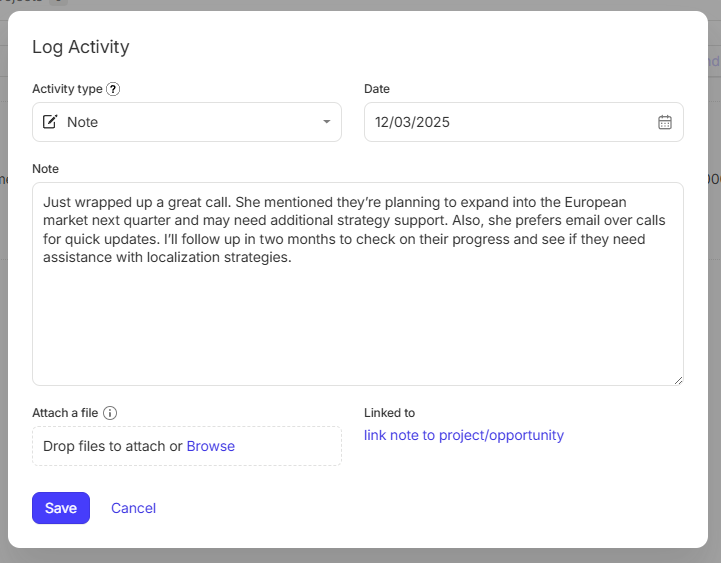
Use the Notes feature to log any relevant information immediately after meetings or calls so you never forget important takeaways. You can even use the Capsule’s Mobile CRM App to record the details wherever you are.
For example, suppose a client mentions they’re expanding into a new market next quarter. Add this note to their profile so you can follow up at the right time without relying on scraps of notepaper or your memory.

Step 2: Automate your follow-ups
We’ve all had the experience where we’ve forgotten to check in with a customer, and by the time you remember, it feels awkward. With automation, you can ensure no follow-up falls through the cracks.
Set Task Reminders after each meeting to follow up at the right time. For example, if you’ve just completed a project, set an automated reminder to check in three months later and ask how things are going.
Use Capsule’s Tracks feature to automate your processes. For example, after a project ends, schedule check-ins at 30, 60, and 90 days. This keeps relationships warm with minimal effort.

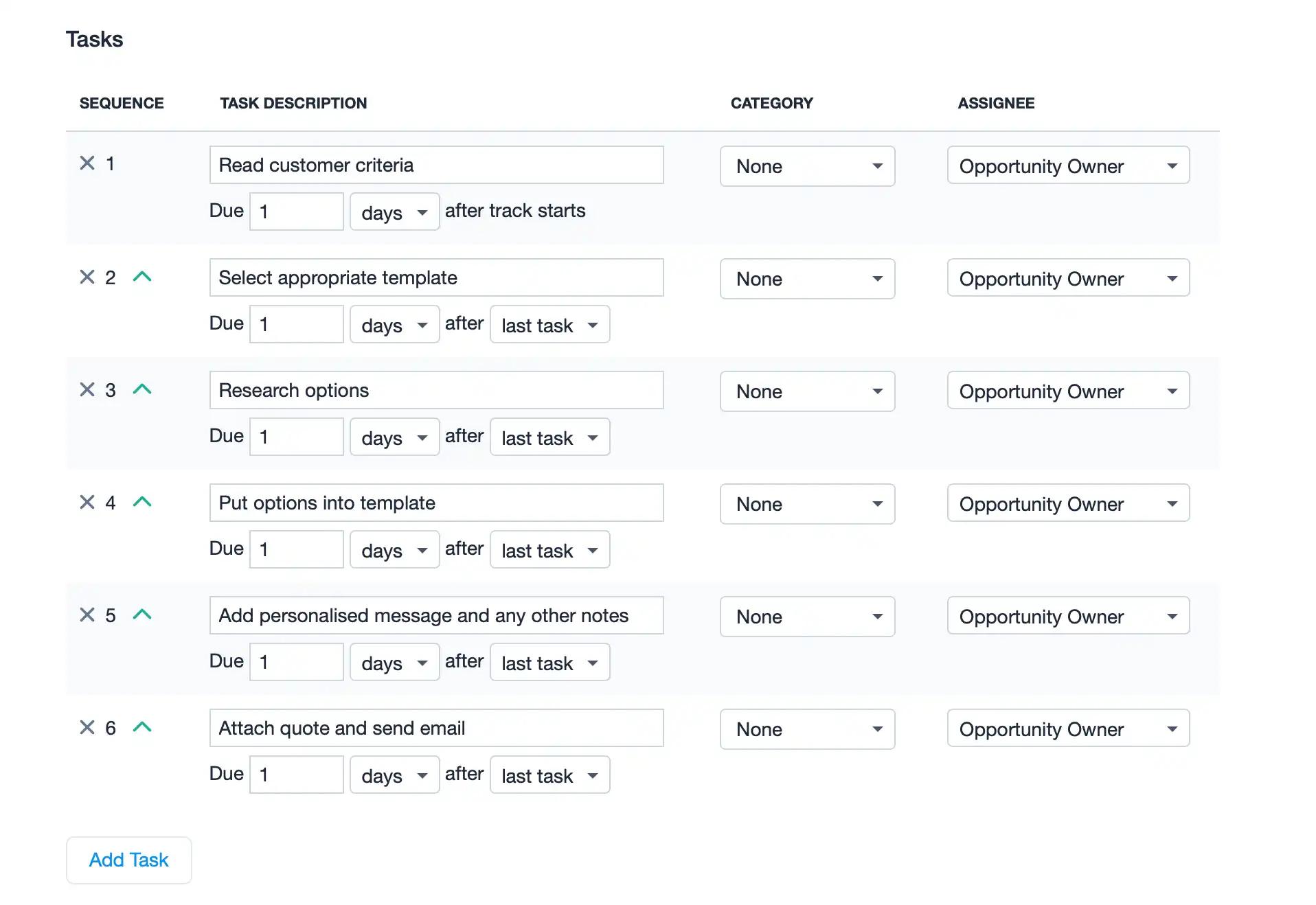
You can also sync Capsule with your email so you can schedule check-ins and see past conversations in one place.
Step 3: Segment clients for smart, personalized communication
We all know that personalized messages are more effective than generic ones, but manually customizing every email takes too long.
Use Capsule’s Tags to organize your data and categorize clients (e.g., VIP clients, long-term customers, or new leads). You can take this a step further with DataTags to store extra details.
Filter your clients based on industry, last interaction date, or purchase history to send relevant updates. You can also sync with email marketing tools like Transpond to send tailored messages at scale.
For example, if you’re a financial advisor, segment clients based on their investment interests. When market trends shift, you can quickly send the right insights to the right people.
Step 4: Use insights to identify relationship gaps
Some clients get a lot of attention, while others unintentionally slip through the cracks. Capsule’s customer insights help you go beyond traditional metrics, allowing them to uncover deeper trends and patterns in your customer relationships.
For example, you can monitor:
- Won/Lost Opportunities, to see which type of relationships to prioritize
- Leaking Pipeline, to see which stages are critical to relationships
- Average Time to Won, to see if you need to follow up more
- Average Sales Value, to identify changes in customer behavior
- Lost Reasons, to better understand your client’s priorities.

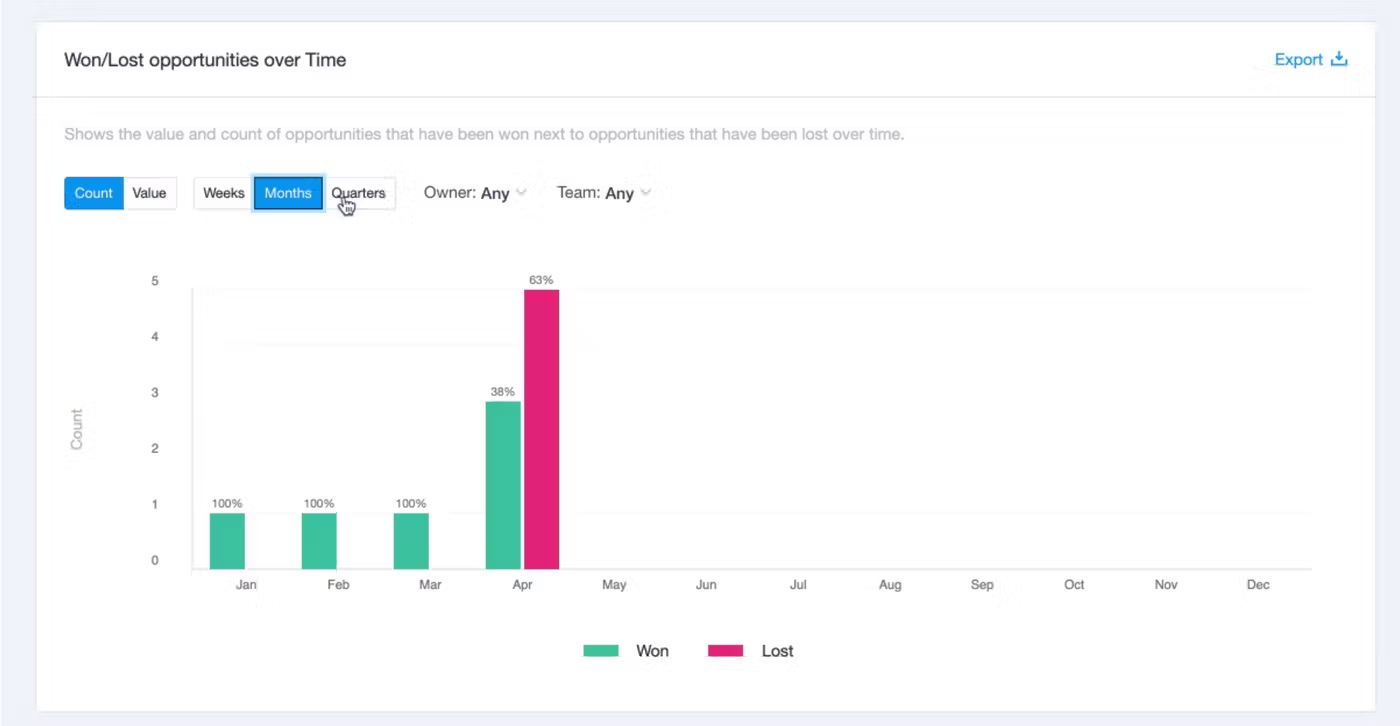
Capsule provides a user-friendly platform and analytics to truly understand your customer data, uncover valuable insights, and make smarter decisions.
Stronger client relationships, less effort
Building meaningful client relationships doesn’t have to be time-consuming or overwhelming. With the right approach, you can create personalized, thoughtful connections even when you’re busy.
Capsule helps you stay on top of client relationships without the stress. By automating follow-ups, tracking key details, and making personalized outreach easy, you can strengthen client relationships without it taking over your day.
Ready to build lasting client relationships without the stress? Try any Capsule plan free for 14 days and see how easy it can be.