TopBuilder isn't a generic sales CRM with a construction label attached.
It's built around how contractors win work. Leads become opportunities and bids. Teams manage proposals, quotes and relationships, then connect CRM data with ERP, estimating and project-management systems. ContractorBI adds pipeline, revenue and profitability reporting on top.
That creates a more interesting alternatives list than simply naming six popular CRMs.
Some contractors need the construction-specific business development layer TopBuilder provides. Others mainly need contacts, opportunities and follow-up. AEC firms may want deeper proposal intelligence, while service contractors care more about getting a quote onto the schedule.
These five alternatives cover each of those cases.
Why consider an alternative to TopBuilder?
TopBuilder covers several jobs that often sit in separate systems.

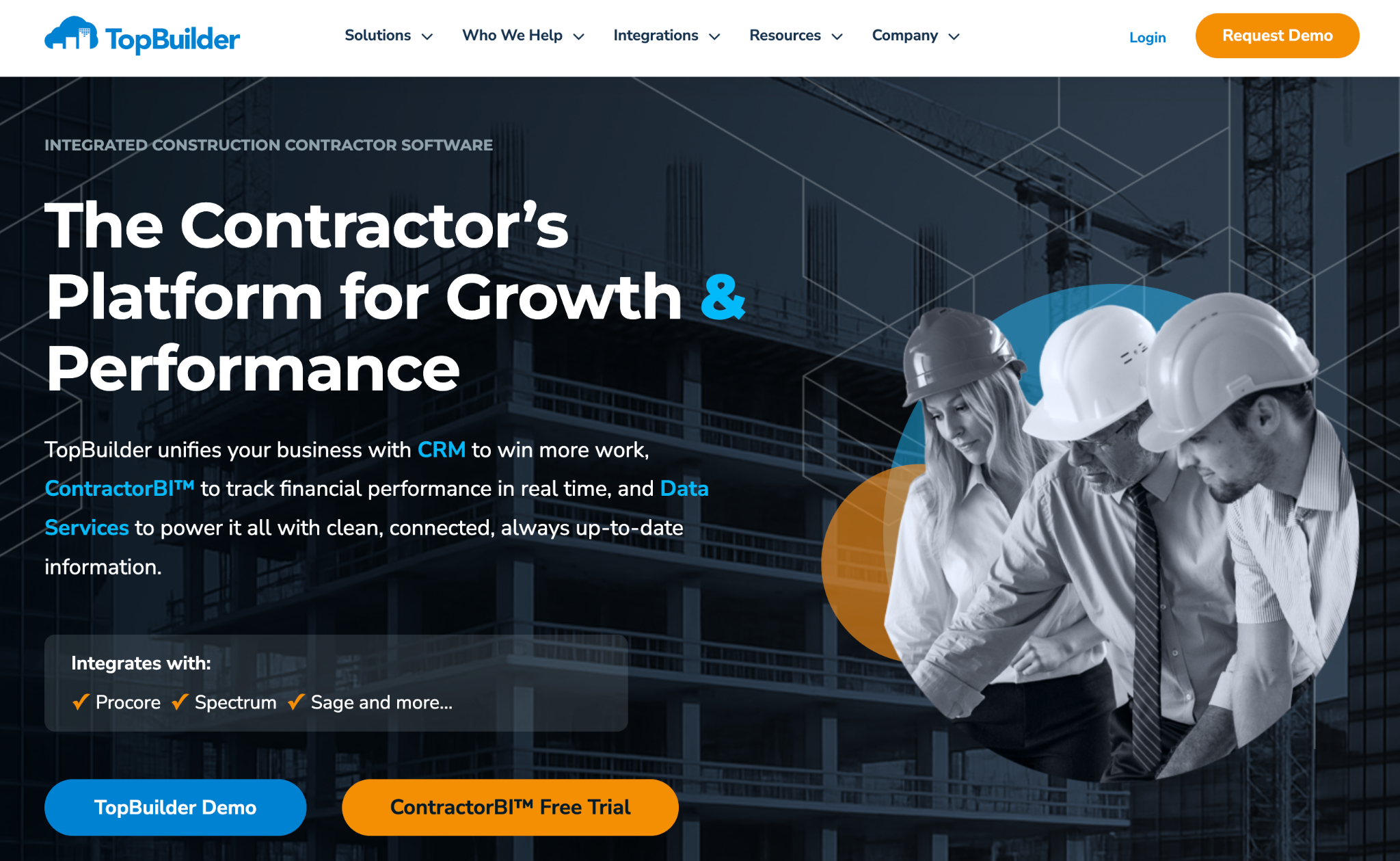
Its CRM tracks prospects, customers, bids and sales activity. Quoting tools support predefined pricing and e-signatures. ContractorBI connects pipeline data with forecasting and business intelligence. Integrations bring in data from platforms including Procore, Sage, Acumatica, Viewpoint, Gmail and Outlook.
For a construction business development team, that's a strong combination. However, it may be more specialized than a smaller contractor needs.
A company mainly trying to stop leads disappearing after the first quote may get more from a straightforward construction CRM than from a platform connecting sales intelligence with ERP and project data.
There's also an unusual review picture.
G2 currently shows 2.3/5 from only three TopBuilder reviews, while Capterra shows 5.0/5 from 15 reviews, with particularly strong scores for customer service and ease of use. Those samples are far too small and inconsistent to treat either rating as a definitive verdict.
The safer way to compare alternatives is to start with the type of construction business you're running.
Best alternatives to TopBuilder CRM
1. Capsule CRM
Capsule already appears among G2's listed TopBuilder alternatives, which makes sense once you separate construction CRM from broader construction software.

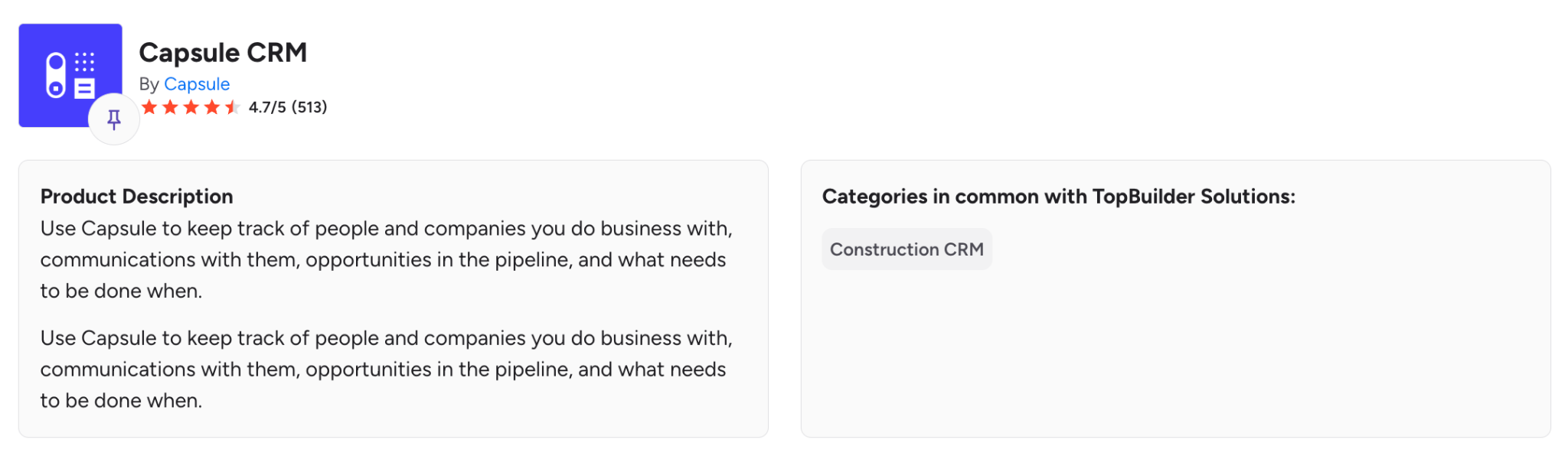
TopBuilder is designed for construction business development. Capsule is designed for relationship and sales management across industries, with a dedicated setup for construction businesses.
That difference works in Capsule's favor when a contractor mainly needs to answer a few recurring questions:
- Who are we talking to?
- Which bids are still live?
- Who needs to follow up?
- What work are we likely to win?
- What happened with this customer last time?
Capsule can turn those questions into a visual sales pipeline. A contractor might move an opportunity through inquiry, qualification, site visit, bid preparation, quote sent and negotiation before marking it won or lost.

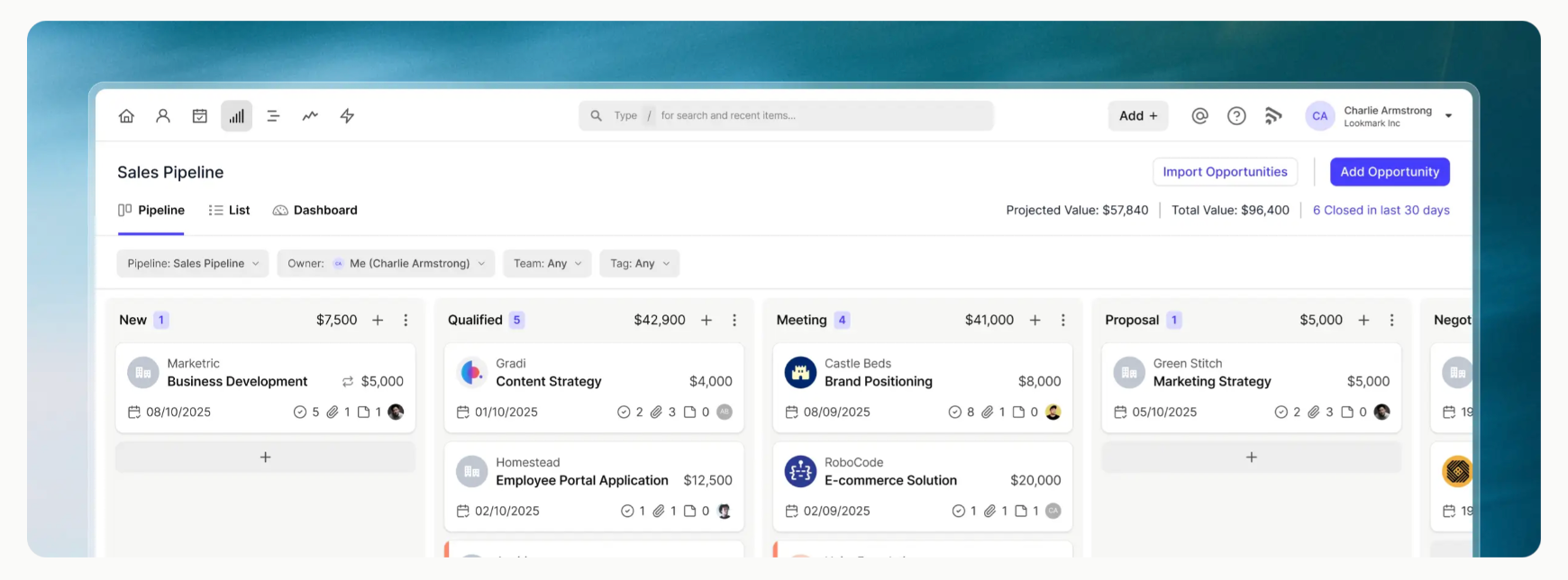
Custom fields can hold estimated job value, project type, location, tender date or lead source. Workflow automation can create tasks as deals move forward so the process doesn't depend on someone remembering to send another email.
The distinction becomes clearer after a win.
Capsule can move simpler client work into CRM project management, but it doesn't turn into a construction ERP. Detailed estimating, resource planning and project financials can stay in specialist systems.
For smaller construction businesses, that separation often creates a cleaner stack.
Accounting is a good example. QuickBooks users can connect finance with CRM rather than rebuilding accounting inside the sales tool, and there are several QuickBooks CRM integration options for businesses following that model.
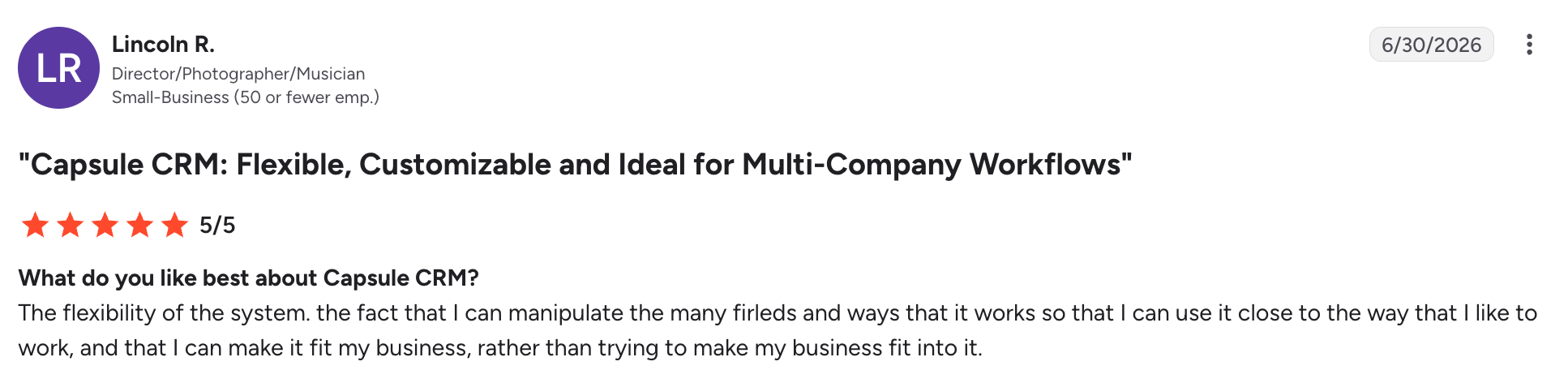
Reviewers seem to respond well to the simplicity. G2 currently rates Capsule 4.7/5 from nearly 500 reviews, compared with TopBuilder's much smaller review sample.

Best for: Small and midsize contractors that want better relationship, bid and pipeline management without specialist AEC business-development infrastructure.
Pricing: Free plan available. Starter costs $21 per user monthly, or roughly $18 on annual billing. Growth is around $36 annually, with higher Advanced and Ultimate tiers available.
Review signal: 4.7/5 on G2. Ease of use is one of Capsule's strongest recurring review themes.
2. Unanet CRM by Cosential
If you're replacing TopBuilder because you want another construction-specific CRM, Unanet deserves to be near the top of the list.

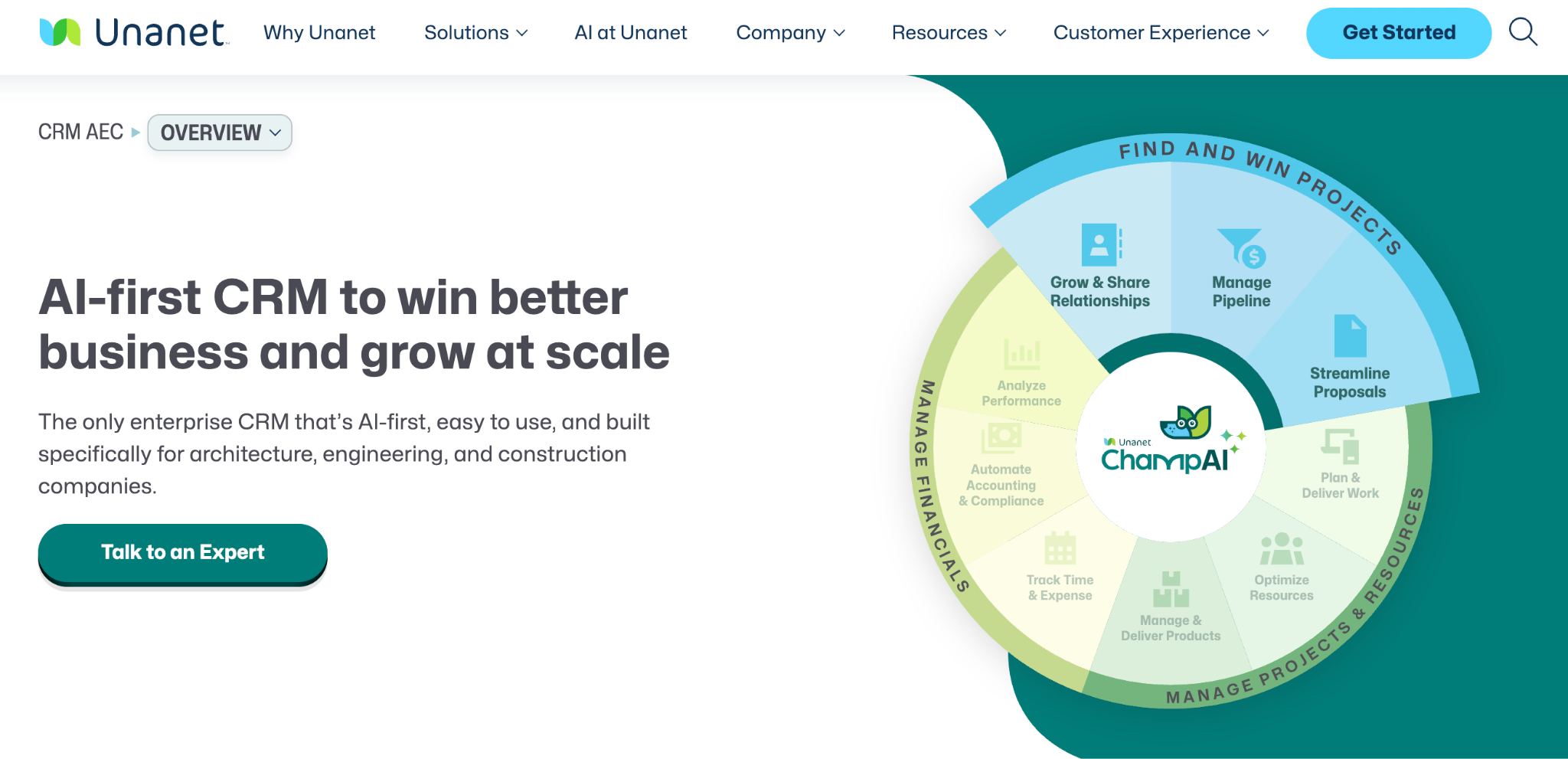
It isn't trying to simplify construction CRM into generic lead management.
Unanet CRM is purpose-built for architecture, engineering and construction firms. Pipeline management includes pursuit strategy and configurable go/no-go processes. The relationship layer connects contacts with companies, projects and past work, while its proposal tools bring project history and employee experience into proposal production.
That gives it a clear advantage over general-purpose CRM when a firm's sales process revolves around formal pursuits rather than conventional deals.
Consider an engineering consultancy pursuing a public infrastructure project.
The firm may need to assess relevant project history, the strength of existing client relationships, available people, previous performance and likelihood of winning before committing resources to a lengthy proposal. Unanet is designed around that type of business development.
It also integrates with construction and AEC systems including Procore, Sage, Viewpoint, and Trimble.
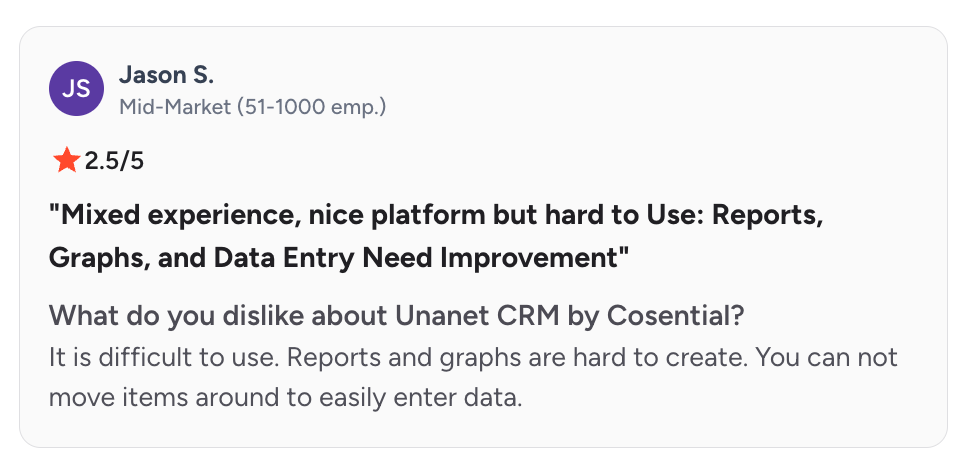
G2 currently scores Unanet CRM by Cosential 4.0/5 from around 260 reviews. Reviewers regularly mention centralized opportunity data, forecasting, and AEC-specific functionality. The negatives cluster around reporting, navigation, implementation, and customization.

That's a substantially different proposition from Capsule – Capsule wins when you want to remove CRM overhead.
Unanet wins when specialist AEC pursuit management is the reason you're buying CRM in the first place.
Best for: Architecture, engineering, and larger construction firms with formal business-development and proposal teams.
Pricing: Current pricing isn't published transparently by Unanet and is typically quote-based.
Review signal: 4.0/5 on G2 from about 260 reviews. AEC specialization and centralized opportunity data score well, while complexity appears more often in negative feedback.
3. Deltek Vantagepoint
Deltek Vantagepoint goes considerably further than TopBuilder; CRM is only one part of the product.

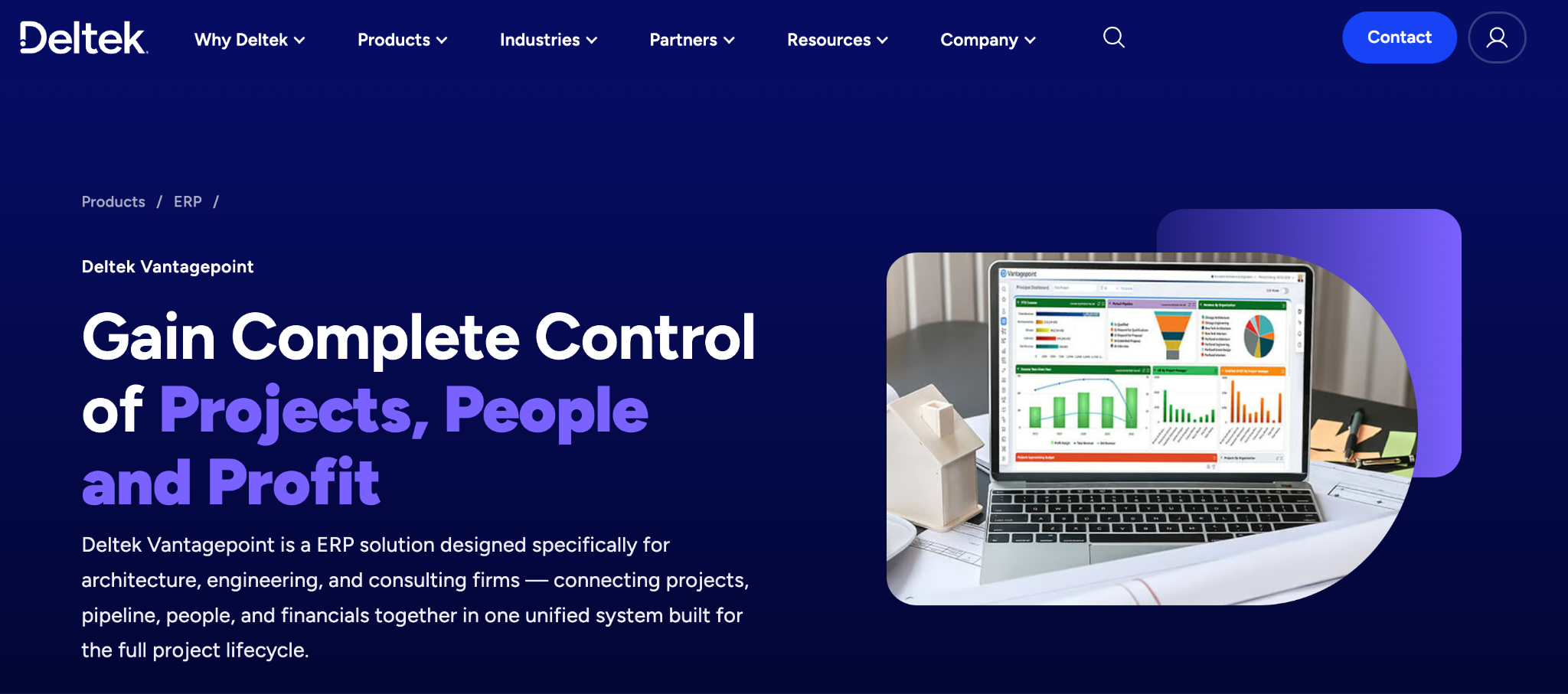
Vantagepoint connects pipeline and client relationships with project planning, resource management, accounting, and company financials. Deltek positions it specifically for architecture, engineering, and consulting firms that want one system across the complete project lifecycle.
That changes the value of CRM data.
A potential project isn't only an opportunity with an estimated deal value. It feeds resource forecasts, future workload, and company financial planning.
For an engineering firm, knowing that $8 million of opportunities may close next quarter isn't enough. Leadership also needs to understand which teams would deliver the projects, where capacity sits, and how that pipeline affects revenue and utilization.
Vantagepoint connects those questions much more directly, but It also makes the product a questionable alternative for smaller contractors.
If the actual problem is poor follow-up, buying project-based ERP is a disproportionate response. The difference between a sales tool and operational software becomes easier to see once companies define what they expect from construction project management separately from CRM.
The reviews reflect Vantagepoint's depth.
G2 currently shows 4.1/5 across roughly 650 reviews. Users frequently praise project management, customization, and the ability to consolidate several business functions. Reporting, complexity, and learning curve are the recurring negatives.


Best for: Architecture, engineering and project-based consulting firms that want CRM connected directly to planning, resources and financials.
Pricing: Deltek doesn't publish standard Vantagepoint pricing. Prospects need a custom quote.
Review signal: 4.1/5 on G2 from roughly 650 reviews. Project and financial visibility perform well, but the platform comes with a bigger learning curve.
4. Jobber
Jobber makes far more sense for a plumber, electrician, landscaper or maintenance company than for an architecture firm's business development department.
Its center of gravity is work, not pursuits.

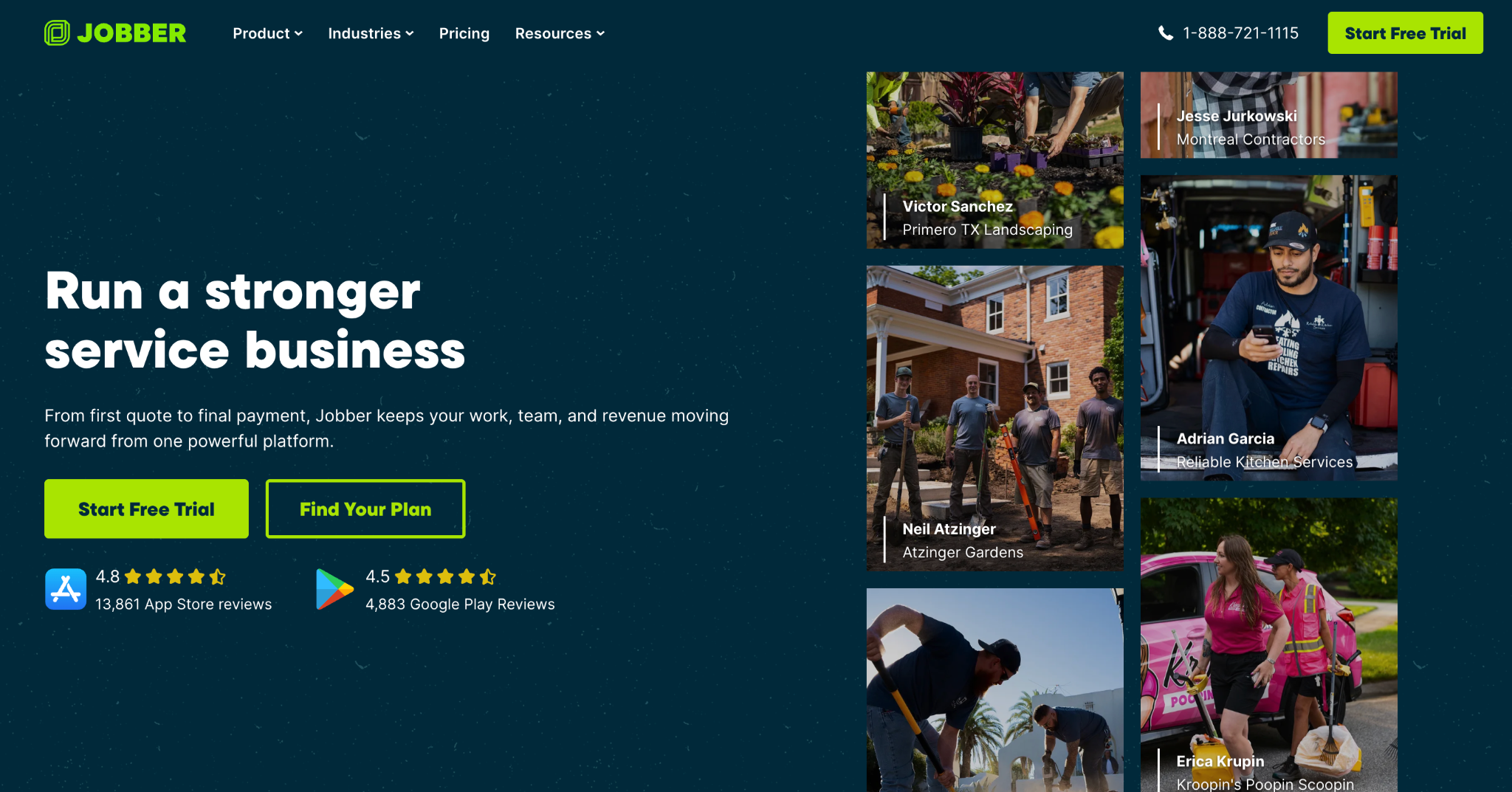
Customers request service. The company creates a quote. Accepted work enters the schedule. Crews complete jobs. The business invoices and collects payment.
Jobber connects those steps with customer management and communication.
That means a specialty contractor searching for a TopBuilder alternative may discover that what it needs isn't construction business-development software at all.
For example, a residential electrical company may care less about go/no-go bid analysis and past-performance proposal libraries. It may care far more about getting an inquiry converted into an estimate, booking an electrician and invoicing the customer without losing information along the way.
Jobber's review profile is particularly strong among smaller service companies.
It currently scores 4.6/5 from more than 500 G2 reviews. Ease of use, scheduling, quoting, and having client communication in one place appear repeatedly in current reviews. Reviewers are more critical when they need complex job costing, financial planning or highly customized workflows.


Capsule also has dedicated content around CRM for electrical contractors and plumbers, where that distinction between sales CRM and field-service software becomes particularly clear.
Best for: Home-service and specialty contractors that need quoting, scheduling, field coordination and invoicing more than formal construction pursuit management.
Pricing: G2 currently lists Core from $29, Connect from $89, Grow from $149 and Plus from $499, with plan structures varying by included users and functionality.
Review signal: 4.6/5 on G2 from 500+ reviews. Simplicity and day-to-day operations score particularly well.
5. FieldPulse
FieldPulse pushes even further toward operations.
Customer management is part of the platform, but so are scheduling, dispatching, work orders, estimates, invoices, project management and field access.

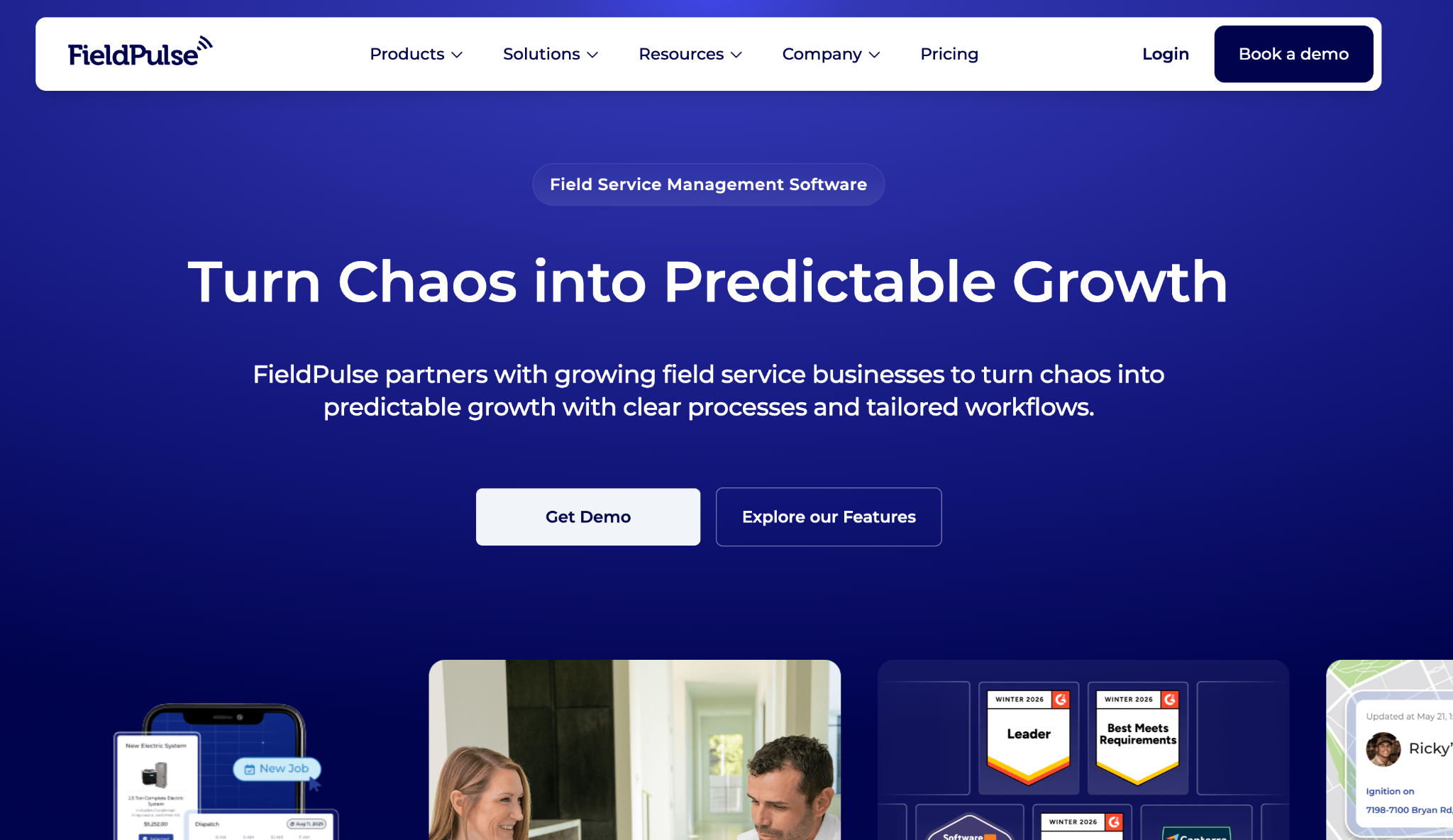
Its CRM keeps customer details, communication, job history and payment records together. Automated follow-ups can trigger after work finishes, while the wider platform handles the job itself.
For trade and service contractors, that's often closer to daily reality than TopBuilder's business-development model.
A commercial HVAC contractor may still manage opportunities and relationships, but once a customer calls with an urgent problem, dispatch capacity and job information become more important than proposal analytics.
FieldPulse puts those operational workflows in the same environment.
Its pricing model recognizes the difference between office and field workers. The company sells full-access seats alongside lower-access field seats and provides custom quotes based on team setup.
Reviews are strong overall.
FieldPulse currently scores 4.7/5 from around 350 G2 reviews. Ease of use and support appear often among positive reviews, including from teams using the system across both office and field staff. There are negative reports too, including bugs and limitations in specific workflows, so the high headline rating shouldn't replace a proper trial with your real job process.


For companies evaluating that category, Capsule also has a dedicated CRM for field services. It helps separate the customer-management requirement from dispatch, routing and technician management before choosing one combined platform.
Best for: Trade and service contractors that want customer management connected directly with dispatch and field work.
Pricing: Custom seat-based pricing. FieldPulse doesn't publish standard package prices on its main pricing page.
Review signal: 4.7/5 on G2 from around 350 reviews. Usability and support are common positives, although individual reviews flag bugs and workflow limitations.
Is Capsule a good alternative to TopBuilder?
For plenty of contractors, yes.
TopBuilder makes the stronger case when the business has a mature construction BD function and wants specialist features such as bid tracking, construction quoting, ContractorBI and deep connections with ERP and estimating software.
Capsule makes the stronger case when the process is closer to:
lead → opportunity → bid → follow-up → won job → customer relationship
That process can be managed through a customized pipeline without turning CRM into another operational construction platform.
It also gives smaller businesses room to build the rest of their stack independently. Accounting can stay in Xero or QuickBooks. More complex delivery can stay in construction software. Marketing can remain in its own platform.
Sales keeps the customer record.
That division is especially sensible when the business has started to outgrow spreadsheets but hasn't outgrown a simple CRM for a small business.
Buy for the way your company wins work
A large AEC firm pursuing multimillion-dollar projects doesn't sell the same way as a five-person electrical contractor.
Their CRM shouldn't look the same either.
TopBuilder sits toward the specialist construction business-development end of the market. Unanet goes even deeper into AEC pursuits. Deltek connects business development with project economics. Jobber and FieldPulse move closer to service delivery.
Capsule CRM sits at the simpler end.
For contractors that need to know who they're talking to, what they're bidding on and what needs to happen next, that can be exactly where CRM should stay.
Try it today.
Frequently Asked Questions
Capsule is a strong alternative for small and midsize contractors that primarily need relationship and pipeline management. Unanet CRM is closer to TopBuilder for AEC business development, while Deltek Vantagepoint connects CRM with wider project and financial management.
TopBuilder is primarily a construction CRM and business-development platform. It connects with project-management systems and uses project and financial data through its integrations and ContractorBI rather than positioning itself as a full replacement for every construction project-management workflow.
Capsule fits smaller contractors that mainly need sales CRM. Jobber and FieldPulse are stronger options when quoting, scheduling, dispatch or field-service workflows need to live alongside customer management.
Unanet CRM by Cosential is one of the closest alternatives for architecture, engineering and construction firms. It covers relationship intelligence, pursuits, go/no-go processes and proposal management specifically for AEC.